The rise of conversational AI: from research to everyday assistant
OpenAI's ChatGPT didn't just appear overnight. It grew out of years of work on large language models, starting with GPT and GPT-2, then GPT-3, and finally the chat-focused product that changed how millions use AI. This article walks through the key milestones, releases, and shifts that define ChatGPT's history and its role in the conversational AI revolution.
Release Timeline & Major Milestones
| Date | Milestone | Significance |
|---|---|---|
| June 2018 | GPT-1 | OpenAI's first generative pre-trained transformer; foundation for later models |
| Feb 2019 | GPT-2 | Larger model, strong text generation; initially released with caution |
| June 2020 | GPT-3 | 175B parameters, API access; showed scale could dramatically improve capability |
| Nov 30, 2022 | ChatGPT (GPT-3.5) | Public chat interface; went viral and brought LLMs to mainstream use |
| March 2023 | GPT-4 | Multimodal, stronger reasoning; powering ChatGPT Plus and API |
| 2024–2025 | GPT-4o, o1, ongoing updates | Faster, cheaper, and more capable models; deeper integration into products |
Before ChatGPT: GPT-3 and the API Era
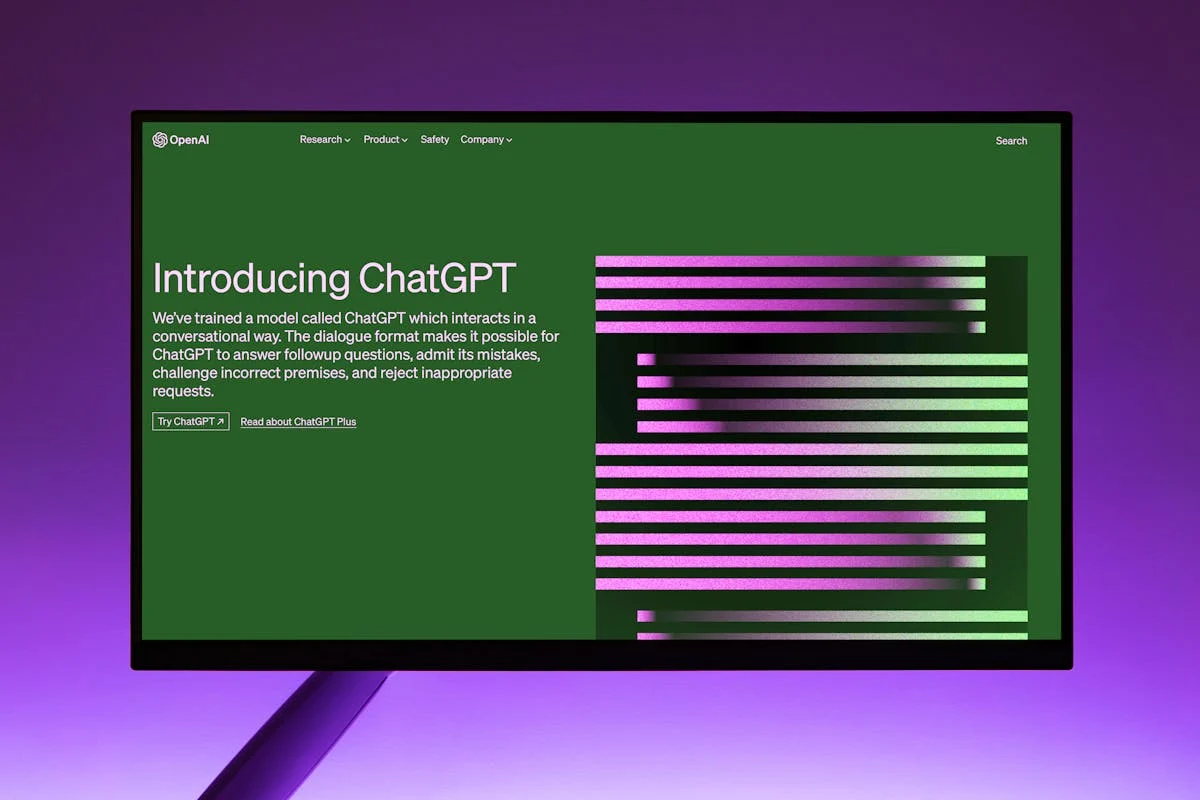
From research papers to developer APIs: the path to ChatGPT
GPT-3 (2020) proved that scaling parameters and data could yield impressive few-shot and zero-shot behavior. Access was mainly through OpenAI's API, so most people didn't interact with it directly. ChatGPT changed that by offering a simple chat UI on top of a model fine-tuned for dialogue (often referred to as GPT-3.5), with reinforcement learning from human feedback (RLHF) to make responses safer and more helpful.
Why ChatGPT Took Off
- Simple interface: No API key or code required—just type and talk
- Wide use cases: Writing, coding, brainstorming, learning, and casual conversation
- Free tier: Lowered the barrier to try powerful AI
- Timing: Arrived as interest in AI was already rising
From ChatGPT to GPT-4 and Beyond
Model evolution: better reasoning, vision, and tool use
GPT-4 (March 2023)
GPT-4 was a major step up: better reasoning, less hallucination, and support for images (multimodal). It became the engine behind ChatGPT Plus and the default for many professional and API use cases.
Ongoing Updates
- GPT-4 Turbo / GPT-4o: Larger context, faster responses, lower cost
- o1 (reasoning model): Emphasis on chain-of-thought and complex problem-solving
- ChatGPT product: Browsing, code execution, custom GPTs, and deeper integration with tools
Impact on the AI Landscape
| Area | Impact |
|---|---|
| Consumer AI | ChatGPT made conversational AI a daily tool for millions |
| Enterprise | APIs and ChatGPT Enterprise accelerated adoption in workflows and products |
| Competition | Spurred rivals (Claude, Gemini, Llama, etc.) and raised the bar for quality and safety |
| Regulation & safety | Brought LLM safety, alignment, and policy into mainstream discussion |
Summary
ChatGPT's history is a path from research (GPT, GPT-2, GPT-3) to a global product. The November 2022 launch turned a powerful but developer-focused API into something everyone could use, and GPT-4 and later models kept raising the bar for what conversational AI can do. Understanding this history helps put today's models and tools—including how and where to use them—into context.
Key Takeaways
- ChatGPT (Nov 2022) built on GPT-3.5 and RLHF to create a mass-market chat experience
- GPT-4 (March 2023) added stronger reasoning and multimodality; later updates (GPT-4o, o1) extended capabilities further
- Simple UI, free tier, and broad utility drove rapid adoption and reshaped the AI industry
- The ChatGPT story is part of the larger shift from research prototypes to everyday AI assistants
Try ChatGPT on FuseAITools for chat, coding, writing, and analysis in one place.